As in any sport, practice is the only way for an athlete to improve their performance. Putting is a crucial part of golf, and there’s no way around it. Out there on the course, your displays will show whether you’ve put the time into putting practice.
The importance of putting lies in its ability to considerably impact a golfer’s overall score, which is the difference between success and failure of the round. Golfers from all levels tend to put a lot of practice in this game segment to develop their skills and excel over their opponents.
Putting drills is the best way to refine your technique and build the necessary consistency in your putting stroke. That’s why many golfers dedicate a lot of their time to practicing their short game, as it makes them more precise and instills confidence whenever they are on the golf course.
Let’s see how to practice putting!
Putting Stroke Fundamentals
Mastering the fundamentals is the key to unlocking a golfer’s true potential and achieving success in the game.
The most exploited putting tips and drills are related to posture, alignment, and tempo, all of which are vital to performing a smooth and accurate stroke.
Certain principles must be followed during practice sessions to develop positive habits and learn how to improve your putting in golf as well as achieve consistent success on the green.

Here are the putting practice fundamental steps you can implement:
- Maintain stability
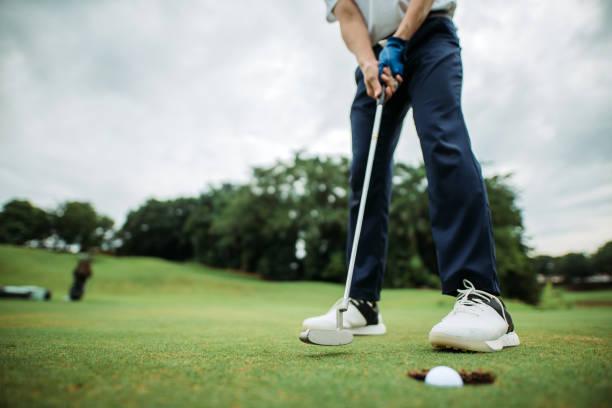
A good putting stroke begins with stability in the body’s lower half. This is why keeping the hips, legs, and feet completely still while performing the putt is important.
Maintaining stability will provide a solid foundation for repeatable putting motions.
- Balanced weight distribution
A good golfer always aims to keep their weight evenly balanced between both feet. Maintaining balance allows you to have better controlover the putter head and prevents unwanted shifting from the correct line.
- Equal backswing and follow through
One of the most important fundamentals is to maintain consistency in stroke length when going back and forth. Having such symmetrical movements will help improve the distance control of the short putts.
- Develop rhythm
A steady rhythm means having a harmonious flow of movements that translates into precise strikes on the golf balls. Making a few putts without the ball can be a great way of developing rhythm before you start putting.
Golf Putting Drills
The best golf putting drills are the ones that focus on creating a repeatable swing. Additionally, a putting drill should improve the judgment of distance and decision-making when choosing the line and speed control.
The adaptability to different putting green conditions comes with practice putting drills on various types of greens.
By exercising their short game on different surfaces, the golfers set themselves up for success as they will be able to adjust to the specific characteristics of each green they encounter over a round of golf.
Over time, their adaptability will become a major part of their skill set and provide them with a significant advantage over their competition.

Here are some of the best putting drills for golfers who are seeking to improve their game:
- Coin on the putter head
If you struggle with a slow backswing, then the coin drill is a good putting drill for you. Simply slide off the coin from the putter head as you finish the backswing and transition to making the forward stroke.
This putting drill will improve your uneven stroke, and it will provide your backswing with the necessary speed.
- Putt with wedge
You can often see Tiger Woods on the practice putting green, making putts with a wedge instead of a putter. This improves a golfer’s touch and feel around the greens, as putting with a wedge requires a delicate touch and forces you to rely more on the wrists.
This drill will help you develop better control over distance and speed, and it’s good for different surfaces.
- Clock drill
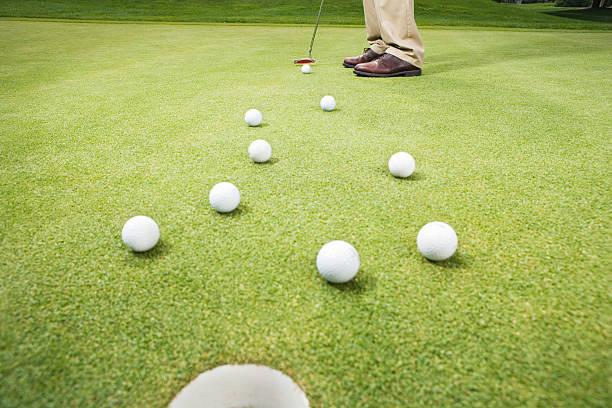
The clock drill is one of the most commonly exploited drills by players from all levels to improve their putting. It consists of placing multiple balls at varying distances around the hole and creating a clock-like pattern.
It is a great drill to improve your confidence from short range, as it will help you develop a consistent and controlled putting stroke.
Start by positioning six balls around the hole at different distances beginning from 3 feet, with the furthest one being 8 feet away. Begin the drill with the close-range putts and work your way around the clock and increase the distance as you go in a circle.
Alternatively, you can set up 12 balls at three different distances, like 4, 6, and 8 feet, hitting them from nearest to furthest.
- Putt through tees
The beauty of this drill is in its simplicity, and you can perform it whenever you have a few minutes available on the practice green.
The idea is to create a training scenario that emphasizes the precision and consistency of your play, building muscle memory through repetition of the sequence.
Practicing with tees can improve your start line as it provides a visual guide that helps you develop the ability to consistently start the ball on the intended path.
To perform this drill, place two tees on the ground just in front of the ball to form a gate. The tees should be parallel to the target line, allowing for a small gap for the ball to pass through. Simply putt the ball toward the hole while aiming to start it on a specific line between the two tees.
- Around the world
This is one of the best putting drills for breaking putts, and it’s how most players practice their putting.
To execute this drill, find a hole that has a noticeable break and place multiple balls surrounding the hole at different distances. Start from the closest ball to the hole while adjusting to the break and slope of the green.
This drill aims to improve the ability to find the best pathway to the hole on more challenging terrain.
Hitting the ball with the right speed and precision and holing putts while adjusting your aim will do wonders for your game, and it will lead you to lower scores.
- Ladder drill
Most golfers will tell you that this is a great way to practice long putts and improve your overall game. The goal of this practice is to work on your distance control and improve your feel for longer putts.
To perform this drill, place five balls in a straight line starting from a distance of 30 feet. Separate them evenly from each other, with each ball positioned a few feet further away from the hole.
When prepared, aim for one putt and use every miss to adjust the speed and trajectory for the next one.
- Gate and mirror drill
Create a gate using tees and place a mirror behind the hole. Putt the ball through the gate while focusing on keeping your head steady and your eyes over the ball while using the mirror to see how well your head is aligned during your putting.
- Straight line drill
Lay an alignment rod on the ground that’s parallel to your target line. Practice putting along this straight line with a focus on starting the ball on the intended path.
- Free target practice
Place a tee for each position on the green you want to putt from. Alter between tees and try to sink shots from various distances while adjusting your aim and speed as you go.
- Pressure putt drill
It’s very difficult to replicate the pressure from in-game into practice. Golfers have to challenge themselves by creating various scenarios in their heads to create tension and force them to turn their game mode on.
A common drill for creating a pressure situation is setting a goal for making a certain number of consecutive putts.
The key aspect is starting anew after each miss, which can make the experience more frustrating or rewarding similar to how it is during a game of golf.
Where to Practice Putting
Putting green isn’t the only place where you can improve your skills. Devoted golfers can work on their game outside of the course and set themselves up for success when they’re playing for real again.
Here are some places where you can exercise your putting skills:
- Golf course
- Practice facilities
- Driving ranges
- Miniature golf courses
- Indoor golf centers
- Home setup
- Local parks
Some driving ranges include putting capacities where you can work on your short game.
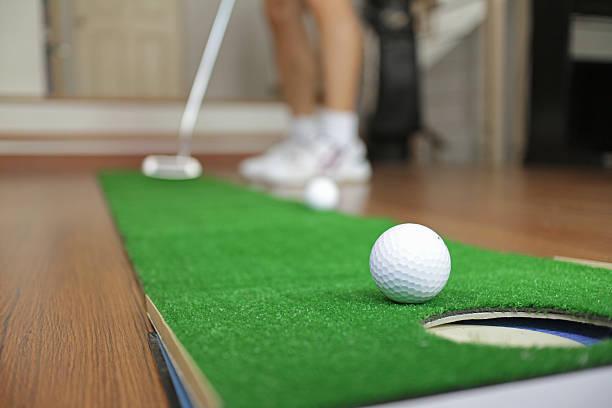
However, not the same as practicing on a golf course, playing miniature golf can still go a long way in helping you hone your skills in a fun and relaxed setting. You can create a small putting area at home using a specialized mat or even a compatible piece of carpet.
Practicing golf outside of the golf course helps you incorporate the sport on a cultural level, and having this kind of devotion really helps improve every aspect of your game.
Apart from making you better, these alternative drills are fun to do and work well for socializing.
Conclusion
Putting practice is essential for all golfers as it forms the foundation of a successful golf game. Working on your putting helps develop crucial skills such as distance control, accuracy, and reading greens.
Various drills such as gate drills, clock drills, and speed control exercises enhance the putting proficiency of the player.
Putting can be exercised in various settings like a dedicated putting green on the golf course, miniature golf courses, and even at home.